The Gap Between Absence and Exclusion
Chloe and Aruna of the PROUD Project on disability, Canadian healthcare, and what clinicians can do differently starting tomorrow.
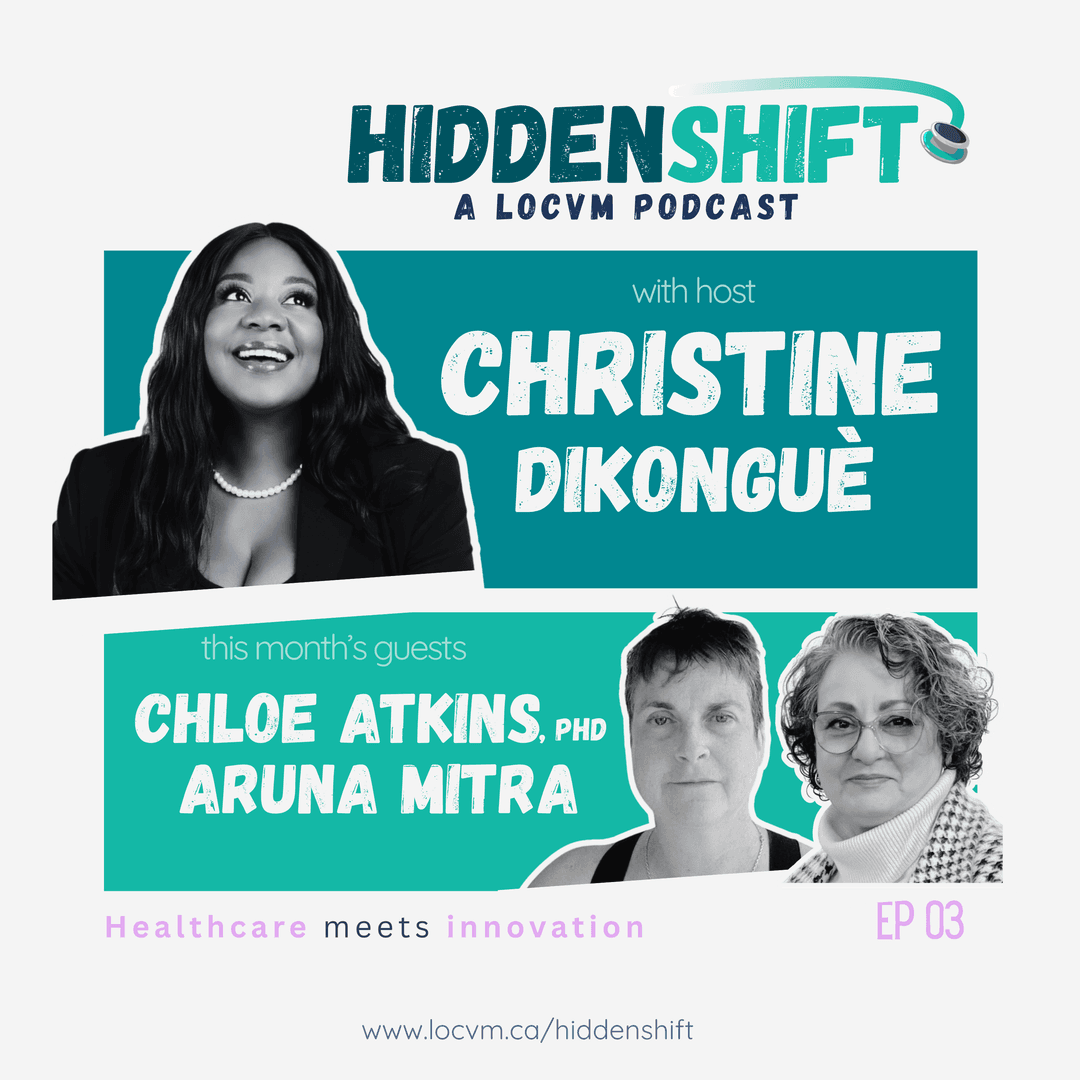
Disabled Canadians are not underserved because the care doesn't exist. They are underserved because the system was not designed with them in mind. That distinction, between absence and exclusion, is the starting point for the PROUD Project, a research and advocacy initiative examining disability, employment, and health equity across five countries. On a recent episode of The Hidden Shift, PROUD co-executive directors Chloe and Aruna sat down to describe what that gap looks like from the inside, and what it would take to close it.
Who we're actually talking about
The first thing Chloe wants clinicians to understand is the scale. A 2018 CDC study of 18 to 35-year-olds found that 52% identified as having a chronic illness. The one-in-six figure that circulates in policy and clinical settings, she argues, is a significant undercount, and it shapes how the system is built and for whom.
“If half of an 18 to 35 population, which is your prime of life, think of themselves as having chronic illnesses, then we are really a society in which we're going to have to navigate this a bit better.”
Chloe speaks from personal experience. Her disability is episodic, where she can present as fully able-bodied or require a power wheelchair, sometimes within the same week. "For years, I was never physically examined by a physician because there was no means to do it other than me just sitting in a chair." The electronic examination tables now appearing in some clinics are progress, she notes. They are also recent.
The gap between what the system thinks it provides and what patients experience
Aruna has spent four decades working in occupational therapy and senior healthcare leadership across Ontario and Alberta. Her answer to the gap question is careful and precise.
The will to help, she says, is generally present. What is missing is the infrastructure to act on it. Funding for home accessibility is fragmented, income-tested, and often contingent on the cause of the disability - a motor vehicle accident may trigger insurance coverage, whereas a stroke with identical functional consequences may not. Navigating what exists requires knowledge most people don't have and advocacy capacity many people lack.
“I think the big gap really is helping people to navigate through a very complicated system, whether it's funding or whether it's how to access resources or equipment.”
Chloe adds the structural dimension: Canada's federated health system means there is no centralized source of information for disabled people or their families. Moving provinces and the rules change entirely. And once the acute care episode ends, the healthcare system largely steps back, where disability becomes a private and family responsibility, not a healthcare one. "Once you're disabled, it's not the healthcare system's responsibility to provide anything to you. It's now sort of seen as outside of the realm of acute care," she said.
Who falls through the cracks?
Both Aruna and Chloe converge on the same answer: people who cannot advocate for themselves, and people who have no one to advocate for them.
Aruna describes intervening for a family member hospitalized after falls - a woman the clinical team had assessed as at baseline, when she was not, and who would not have been referred for rehabilitation without Aruna's direct challenge. "If I hadn't advocated for that, that wouldn't have happened."
Chloe names a different but related problem: the clinical assumption that disability equals diminished quality of life, and the care decisions that follow from it. "If you ask physicians, they just presume that if you don't have a leg, you can't walk. Your quality of life is bad." A disabled person may not be referred to intensive care, she says, because the team has made an unstated judgment about their baseline. "They actually, you know, are a lawyer and work downtown. So, yeah, they should be going to intensive care."
This is not always conscious. That, she argues, is part of the problem.
What PROUD does - and why research alone isn't enough
The standard timeline from research finding to clinical practice is approximately seven years.
For a vulnerable population, Chloe says, that is too long. PROUD's model combines research with direct policy engagement - taking findings into the environments where decisions are made, rather than waiting for the publication cycle to do its work.
Her most recent publication, in CHEST, examined how critical care allocation tools may embed hidden disadvantage for disabled patients. The goal was not academic, but was to reach the people delivering care before the next patient arrived.
Aruna frames the same commitment through the lens of occupational therapy's core principle: that inclusion in community is not a secondary goal but a fundamental right, and that the clinician-patient relationship is structurally unequal in ways that shape outcomes. "Research and advocacy and care need to be in the same space," she said.
What to do differently starting tomorrow
Asked what they want a healthcare professional hearing this to do differently, both answers were specific.
“Take a moment to understand who that person is and not necessarily see them as they are presented to you. Find out what's important to the person, what do they want to be able to do, what do they need to be able to do. See people as people.”
Chloe's ask starts with the clinical team itself: "Look at your clinical team and ask - who here needs accommodation? What do my team members need in order to be more productive?" The risk, she argues, of seeing yourself as purely a helper is that you stop recognising your own needs - and your patients become other rather than human. "If we begin to think of patients not as other, but as a part of humanity of which we are an integrated part, then you don't get this top-down view."
The research literature supports the structural framing both women offer. Mathews et al. (2024) identified system-level variables - not individual clinician attitudes alone - as the primary drivers of inequitable care experiences. Attitudinal change matters, but it operates within a system that either enables or undermines it. PROUD is working on both.
Source
Chloe and Aruna are co-executive directors of the PROUD Project, a research and advocacy initiative examining disability and health equity across Canada, the US, the UK, France, and Britain. This article is based on their conversation with Christine Dikonguè for The Hidden Shift podcast.
References
Mathews M, Idrees S, Ryan D, et al. System-based interventions to address physician burnout: a qualitative study of Canadian family physicians' experiences during the COVID-19 pandemic. Int J Health Policy Manag. 2024;13:8166. doi:10.34172/ijhpm.8166
Centers for Disease Control and Prevention. Chronic conditions among adults aged 18–35. 2018.