
Advance Care Planning: An Emergency Physician's Perspective on Preparing for the Unexpected
A conversation with Dr. Laura Shoots, emergency physician and founder of Take Care, about healthcare decisions, family preparedness, and making important information accessible before it's needed.
The importance of planning ahead
Dr. Laura Shoots has spent much of her career in emergency medicine, where she has seen firsthand how difficult it can be for families to make important medical decisions without knowing what their loved one would have wanted.
“For me, it's just a Friday afternoon, but for somebody else it could be literally the worst day of their life.”
For emergency physicians, managing critical situations is part of the job. For families, however, an unexpected hospitalization can bring uncertainty, difficult decisions and questions they may never have discussed before. Shoots didn't originally plan to become an emergency physician. She entered medical school expecting to pursue internal medicine, drawn to cancer research and the challenge of diagnosing complex conditions. After an emergency medicine rotation, she discovered that the specialty offered much of the diagnostic work she enjoyed, combined with the pace, variety and problem-solving she found rewarding.
Her experience in emergency medicine also shaped her understanding of an important gap in healthcare: many families are simply not prepared for the decisions they may eventually face.
When patients can't speak for themselves
One of the most challenging situations in emergency medicine arises when a patient is too sick to communicate their wishes. Doctors then turn to family members, sometimes asking them to make decisions about surgery, life-sustaining treatment or the direction of care. These can be enormous responsibilities, particularly when nobody knows what the patient would have wanted.
Shoots describes a recent case involving a patient with a traumatic brain bleed. A surgeon needed to know whether the family was comfortable proceeding with surgery, but the family had no clear understanding of what the patient would have chosen. In emergency medicine, when there is no guidance, the default is often to do everything possible.
That doesn't necessarily mean doing what the patient would have wanted. Shoots sees this as part of a broader cultural problem. People routinely prepare for emergencies in other areas of life. Children practise fire drills and lockdown procedures, despite how uncomfortable those scenarios are. Yet conversations about serious illness, medical wishes and end-of-life care are often postponed indefinitely.
Her argument is that these conversations shouldn't begin in the emergency department. They should happen earlier, when people have the time and ability to think through their preferences and communicate them to the people they trust.
What is advance care planning?
Advance care planning means discussing your healthcare wishes with the people who may one day need to make medical decisions on your behalf. It involves thinking about what matters to you, what kinds of treatment you would want, and who you trust to speak for you if you cannot speak for yourself.
These conversations can be uncomfortable, but avoiding them doesn't make the decisions disappear. It simply leaves someone else to make them without knowing what you would have wanted. In her experience, disagreements about medical decisions are among the most significant sources of family conflict at the end of life.
Shoots believes advance care planning should become a more ordinary part of how families prepare for the future, rather than something addressed only when illness or a medical emergency makes it unavoidable. She has created a free conversation guide to help families get started, available at takecaretogether.ca.
What is Take Care?
Take Care is a web-based platform designed to help people organize and share important information before someone else needs to make decisions on their behalf. It goes beyond traditional estate planning. Alongside healthcare wishes, users can document practical details such as where their will is kept and which lawyer prepared it, important financial and personal information, digital assets and account information, documents an executor may need, and instructions for family members and other trusted people.
The platform is built around three steps: plan, share and take care. Importantly, sharing is selective. Someone might give their children access to their healthcare wishes, their spouse access to all their important information, and a neighbour instructions for caring for their pet if they are hospitalized.
The idea is to get information out of someone's head and filing cabinet and into a format that the right people can access when they need it. Shoots describes Take Care as bringing together medical, financial and personal information that often falls outside the scope of a traditional will.
Consider an aging parent whose adult child holds power of attorney. That child may eventually need to know everything from their parent's healthcare preferences to where important documents are stored. Take Care gives families a way to organize that information and have those conversations while the person can still explain what matters to them. For Shoots, preparation is about making important information accessible and reducing the burden on family members when circumstances change.
Why families should have these conversations early
Advance care planning is not only about end-of-life decisions. It is also about making sure the people closest to you understand your preferences if you become seriously ill, are hospitalized or temporarily unable to communicate. Without those conversations, family members may find themselves making decisions under pressure, often with incomplete information and different interpretations of what their loved one would have wanted.
Planning ahead gives everyone a clearer starting point. It also doesn't mean that every decision must be made in advance or that preferences cannot change. The goal is to create an ongoing conversation, document what matters, and make sure the right people know where to find that information. Shoots encourages families to start with a simple conversation about healthcare wishes.
The hidden shift: From emergency medicine to entrepreneurship
Shoots' transition from emergency medicine to founding a company reflects another side of her professional experience. Having grown up in an entrepreneurial family, she had always expected to build a business of her own. The pandemic brought healthcare preparedness and end-of-life conversations into sharper focus, while also highlighting the pressures facing healthcare workers.
When asked whether founding a company is harder than practising emergency medicine, Shoots gives a fairly direct answer: it's easier. The stakes are different. Business decisions involve money and risk, rather than someone's immediate life. She can work from home with two young children, without the demands of nights, weekends, holidays and long hospital shifts.
Emergency medicine involves thousands of decisions, often under intense pressure. After a demanding shift, even deciding what to make for dinner can feel like one decision too many. Building a company is still demanding, but it's a different kind of work. Shoots says she couldn't manage 20 emergency shifts in a month, but she can work 20 consecutive days building Take Care.
There's also a change in how she measures her impact. After years working in community hospitals, she is now able to reach people beyond the walls of a single emergency department.
“It's the shift of recognizing the work I'm doing has the ability to impact way more than the 20 people a shift that I see in the emergency department.”
Leaving the front line comes with some guilt, she acknowledges. But building something that helps families prepare before a crisis offers a different way to contribute to healthcare.
A broader conversation about physician burnout
Shoots' transition also raises questions about the pressures facing physicians. Emergency medicine is demanding by nature, but workload, night shifts, holiday coverage and constant decision-making can make it difficult to sustain over an entire career. Research on physician burnout points to the importance of addressing these pressures at a systemic level. A 2024 qualitative study of Canadian family physicians by Mathews and colleagues examined how workload and access to coverage influenced burnout during the COVID-19 pandemic. Its findings reinforced that individual wellness initiatives alone cannot resolve structural problems.
Shoots' move into entrepreneurship isn't an option available to every physician. But her experience illustrates how medical expertise can have an impact beyond direct patient care. Her work with Take Care also highlights an opportunity to improve how healthcare conversations happen: helping people think about their wishes before a medical emergency, rather than leaving families to navigate those questions in the middle of one.
Source
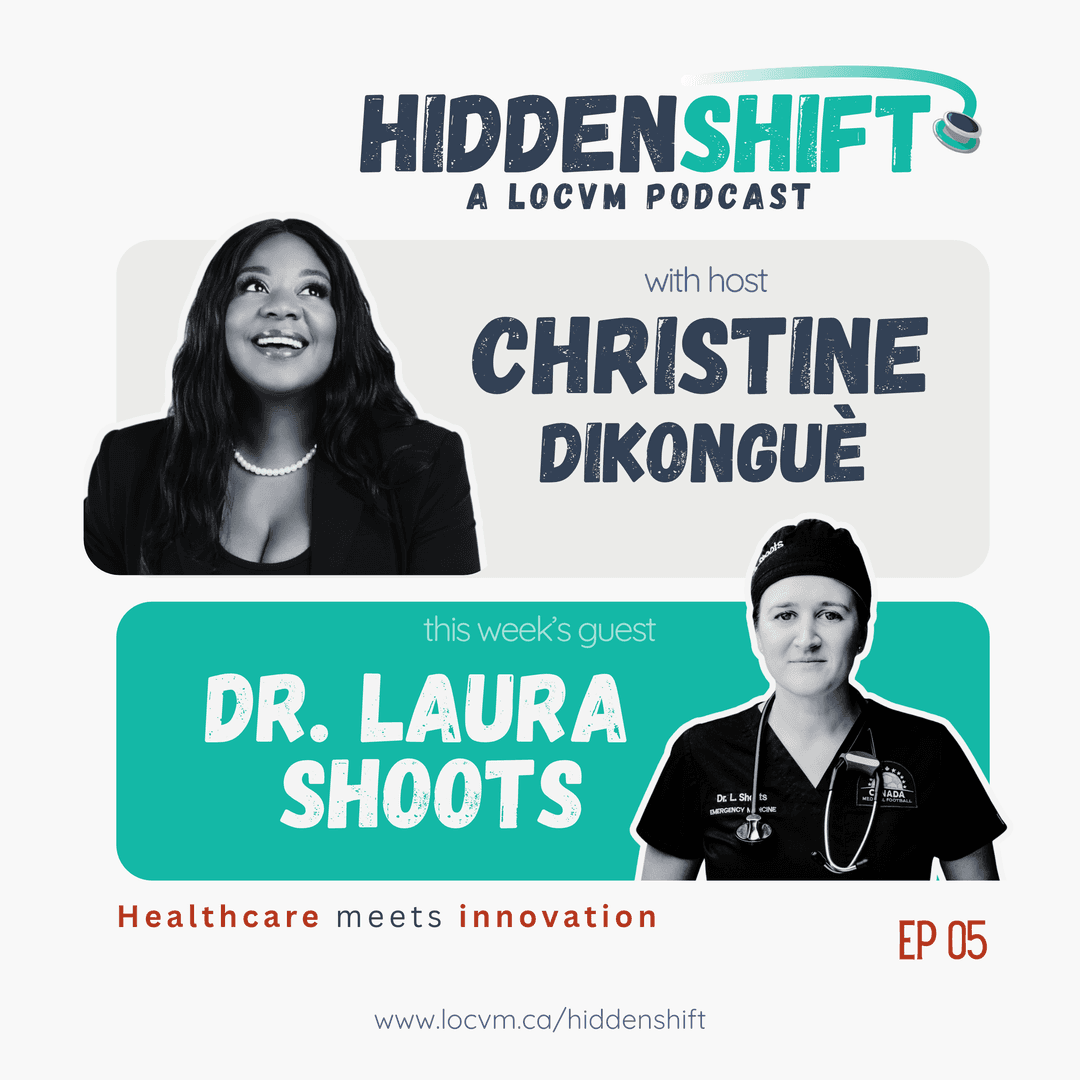
Dr. Laura Shoots is an emergency physician and founder of Take Care, a platform that helps individuals organize and share important healthcare, financial and personal information with the people they trust. This article is based on her conversation with Christine Dikonguè on The Hidden Shift podcast.
References
Mathews M, Idrees S, Ryan D, et al. System-based interventions to address physician burnout: a qualitative study of Canadian family physicians' experiences during the COVID-19 pandemic. Int J Health Policy Manag. 2024;13:8166. doi:10.34172/ijhpm.8166